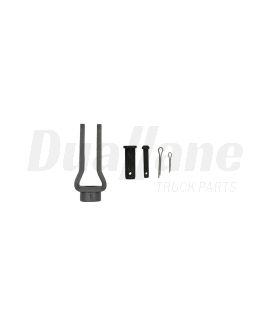
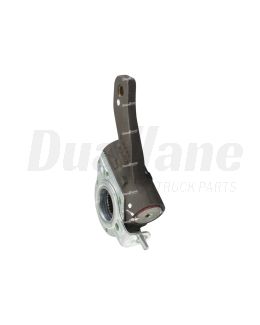
The TDA R803112 represents an Unhanded Meritor Automatic Slack Adjuster (ASA) crafted by Meritor. Displaying a 6.00-inch arm length and a 1.50-inch slack spline diameter encompassing 28 splines, this ASA excels in precision brake adjustment. Employing a stroke-based sensing mechanism designed for chambers of size 30 in Meritor OEM applications, it guarantees meticulous brake tuning. This ASA model features a yellow piston and an untelevised clevis type. With a remarkable torque capacity exceeding 45-inch pounds, it ensures unwavering brake performance and safety across commercial vehicle operations. Its compatibility with the R810019-related clevis kit further reinforces its versatility and practicality within the brake system.
The TDA R803112 represents an Unhanded Meritor Automatic Slack Adjuster (ASA) crafted by Meritor. Displaying a 6.00-inch arm length and a 1.50-inch slack spline diameter encompassing 28 splines, this ASA excels in precision brake adjustment. Employing a stroke-based sensing mechanism designed for chambers of size 30 in Meritor OEM applications, it guarantees meticulous brake tuning. This ASA model features a yellow piston and an untelevised clevis type. With a remarkable torque capacity exceeding 45-inch pounds, it ensures unwavering brake performance and safety across commercial vehicle operations. Its compatibility with the R810019-related clevis kit further reinforces its versatility and practicality within the brake system.
When you’re behind the wheel of a fully loaded semi-truck weighing up to 80,000 pounds, there’s one thing you absolutely can’t afford to second-guess: your brakes. A dependable braking system is the difference between a safe stop and a catastrophic accident. In the heavy-duty trucking industry, air brakes are the gold standard — a proven technology that delivers consistent stopping power, built-in safety features, and the durability to withstand thousands of miles in the most punishing conditions.
But even the most robust air brake system isn’t “set it and forget it.” Every driver and fleet maintenance team needs to understand how these systems work, how to recognize trouble before it escalates, and when it’s time to replace key components.


 WARNING: Cancer and Reproductive Harm -